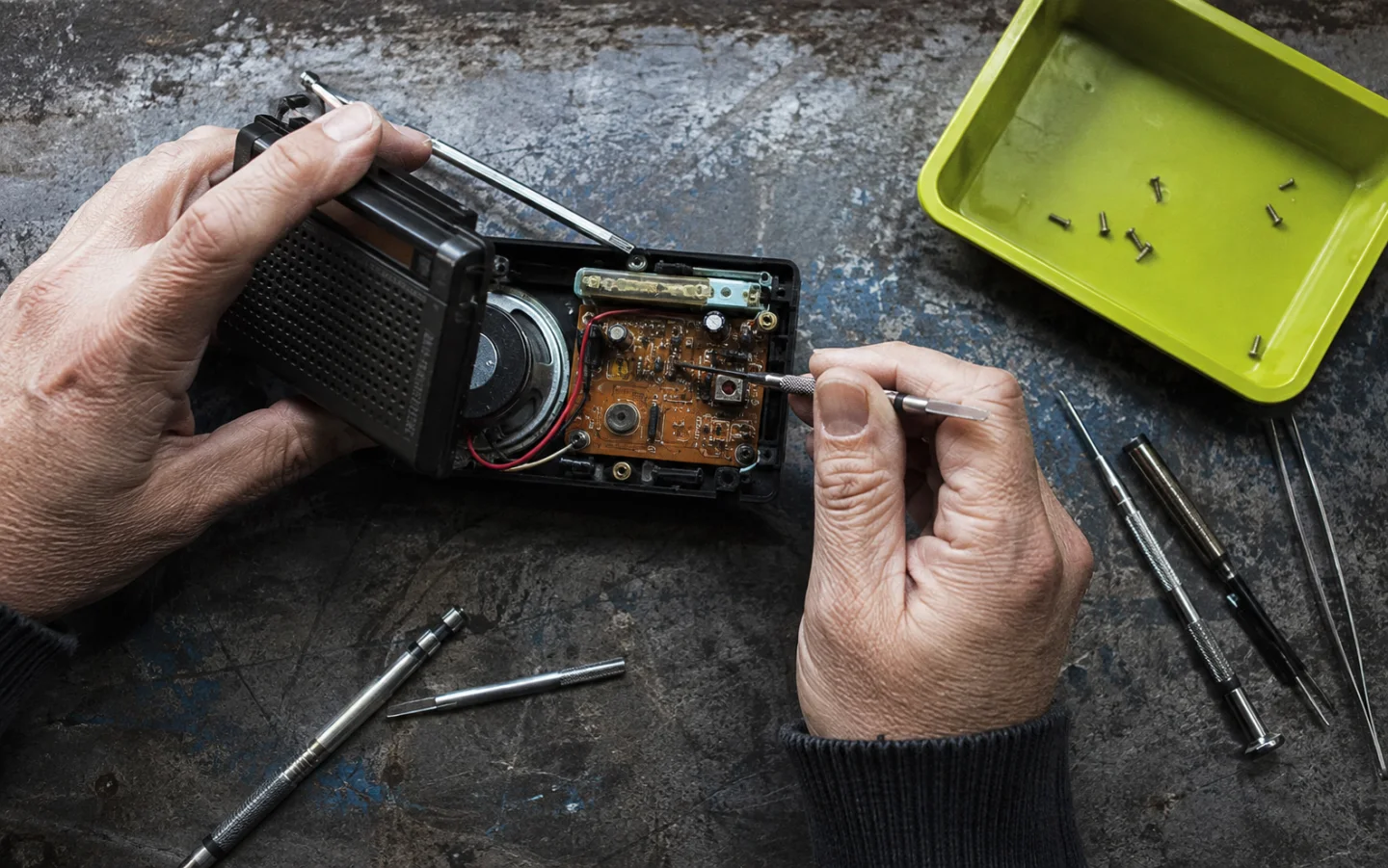
A drawer full of unidentified parts is a reminder that ownership comes with details. A simple object notebook gives those details a place to live.
Method note: An original editorial exercise with suggestions to adapt to your own routines and surroundings.
Start with one familiar object
Pick something you already use: a desk lamp, a radio or a favorite bag. Record its model if it has one, where you keep the instructions and what you like about it. Photograph any label that is awkward to reach.
The point is not to create a complete household inventory. One useful entry is enough to show which information you actually need. Leave the rest of the notebook empty until another object deserves a page.
Record what changed
If a strap is replaced or a loose fitting is checked by a repairer, write down the date and what was done. Include the part description or the workshop details when available. A receipt is more useful when you remember which object it belongs to.
Separate observations from guesses. Writing that a radio makes a crackling sound is more helpful than assigning a cause you have not confirmed. The notebook can support a conversation with a qualified repairer without becoming a repair manual.
Make the record easy to find
Keep the notebook near the drawer where manuals live, or use a single digital folder. Choose the arrangement you will remember months from now. A complicated filing system can become another object that needs maintenance.
Add a note when you lend or pass something on. Instructions, part names and a short history can travel with the object. Care becomes easier when the next person does not have to begin from nothing.