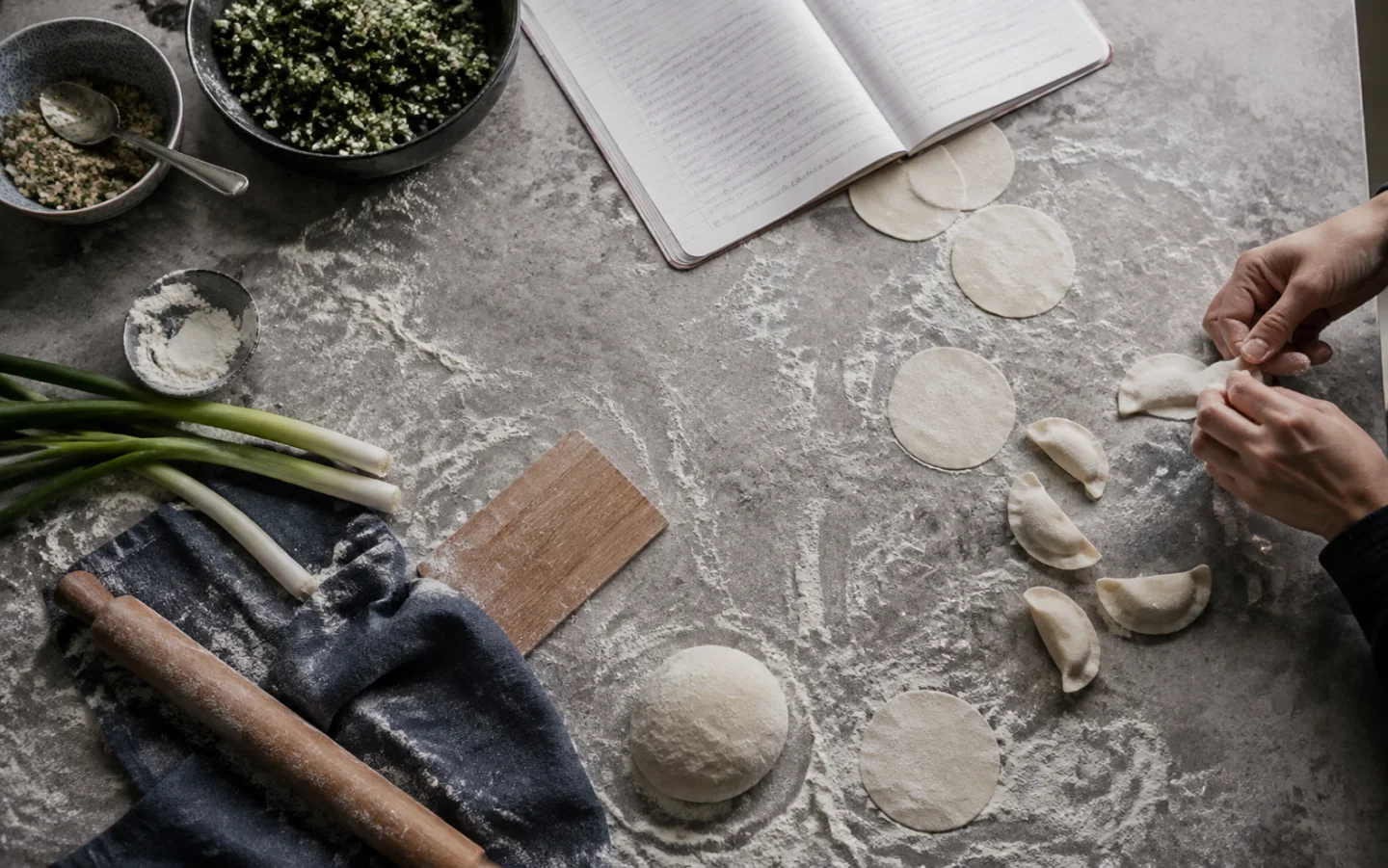
A useful recipe notebook does not have to resemble a cookbook. It can begin with the meal you already make and the one detail you keep forgetting.
Method note: An original editorial exercise with suggestions to adapt to your own routines and surroundings.
Write the meal you made
Record the ingredients and quantities you actually used, along with the pan and the number of portions. If you followed a recipe, note where it came from so you can consult the original instructions again.
Include substitutions as notes, rather than silently rewriting the original. That distinction makes it easier to understand why one version tasted different. You are collecting a practical history of your own kitchen.
Add a cue you can recognize
Alongside the timing, describe what you noticed: the dough felt softer than expected, the sauce needed a larger bowl or the folding stage took longer with company. These details help you prepare for another attempt.
If someone teaches you a family dish, ask which steps they consider essential and write those down in their own terms. Keep their advice separate from your experiments. The page can hold more than one approach without choosing a winner.
Leave space for the next dinner
End each entry with one thing to repeat and one thing to change. Leave a generous margin for later notes. A page that can be corrected is more useful than a beautiful record you hesitate to mark.
Put the notebook somewhere protected from spills but close enough to consult. Use it when planning groceries as well as when cooking. The best evidence that the notebook works is that it comes back to the table.